Retirement education tool
Product design, project management, AI concept, user research
Project Summary
You've worked hard to build your retirement savings, but how do you turn those savings into retirement income?
Most soon-to-be retirees don't even know they have options for how to receive retirement income, let alone which works best for their retirement goals. A Fortune 100 financial services company needed a way to close that knowledge gap. The ask was to design a tool that helped participants explore those options while giving financial advisors a foundation for more meaningful retirement planning conversations.
After delivering the participant-facing experience, leadership on both the client and my agency sides advocated for me to lead design for the advisor-facing experience. The project was high-risk from the start: added to scope at the last minute, we had half the time typically needed for a tool of this scale and complexity, while the team navigated strained client relationships and low internal morale.
Highlights
- Awarded Client Hero Award, commending the strength of relationships built and caliber of work delivered
- Led a team of 2 designers and 2 content strategists, transforming a strained team dynamic into what client leadership called the "dream team"
- Proposed AI-powered interpretation layer that helped shape the organization's broader approach to AI-enabled experiences
Discovery
Designing a sprint cadence built for confidence and speed
With no time for a traditional discovery phase and limited availability of stakeholders, legal, and the design system governance, I structured the project around design sprints. Each sprint included intentional stakeholder reviews, embedded usability testing, and retrospectives, allowing us to validate designs continuously while maintaining delivery velocity.
To reduce research risk, I delegated ownership of usability testing to a senior designer looking to grow into more responsibility. This created continuous user feedback while giving me capacity to focus on overall design direction, stakeholder alignment, and delivery.
Structuring the work in sprints also gave us visibility we couldn't have gotten otherwise: clear signals on where we were slipping, and the flexibility to move pieces around with a real understanding of what that would impact downstream.
Clearing the path for good design work
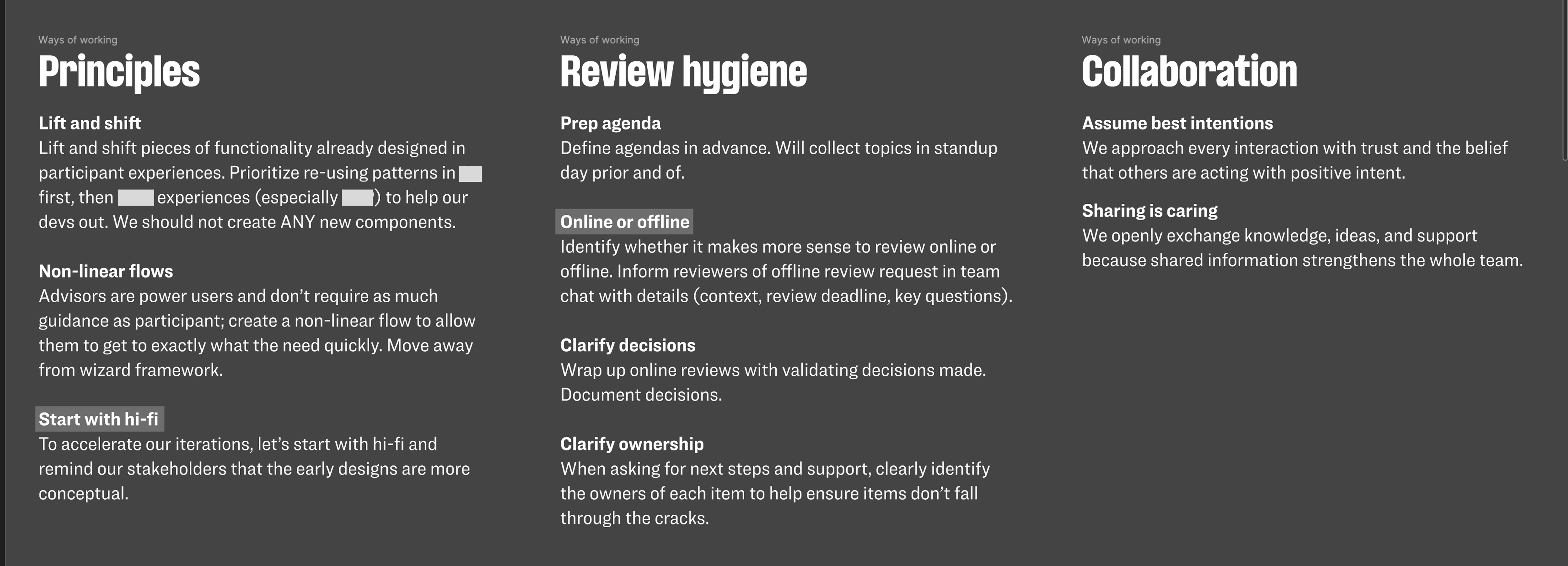
I used design kickoff to reset expectations with both the client and internal team members, facilitating a ways of working session covering design principles, review practices, and collaboration norms.
Before every sprint, I compiled the context designers needed — including prior decisions, known constraints, and out-of-scope items — so they could begin designing immediately. Sprint retrospectives helped us continuously improve our process while giving the team space to reflect during an aggressive schedule.
Detailed Design
Designing for power users
Advisors are expert users who don't need the guided, linear experience designed for participants. Because they often use the tool during live calls, they needed to navigate quickly between sections. As a result, we designed a non-linear interaction pattern that let advisors jump directly to any preference group for editing.
Another challenge was permissions. Participants and advisors each create retirement income projections, but both need visibility into one another's scenarios while having different edit and delete privileges. To manage this complexity, we created an entitlements matrix that defined every permission state and informed the product's interaction design.
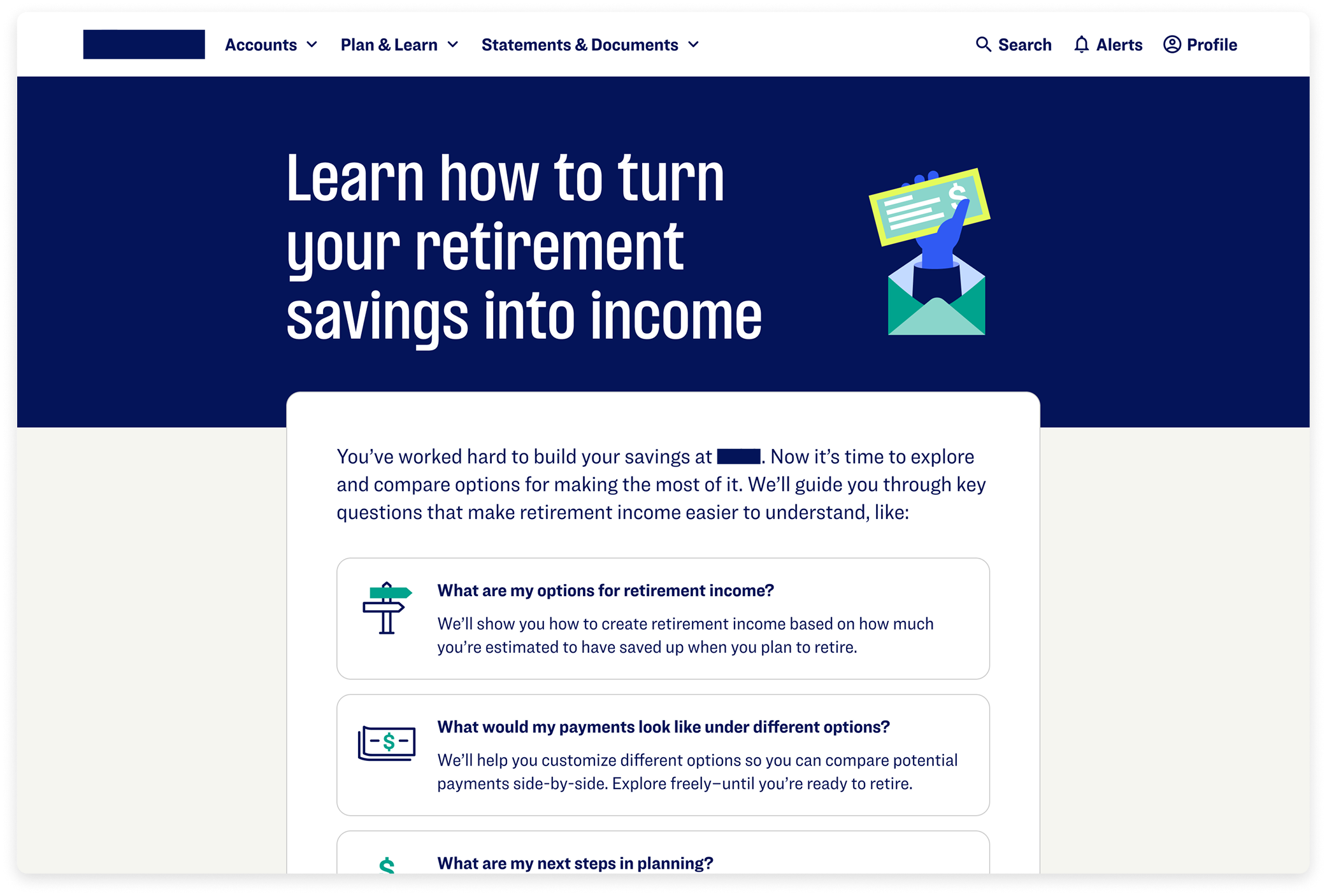
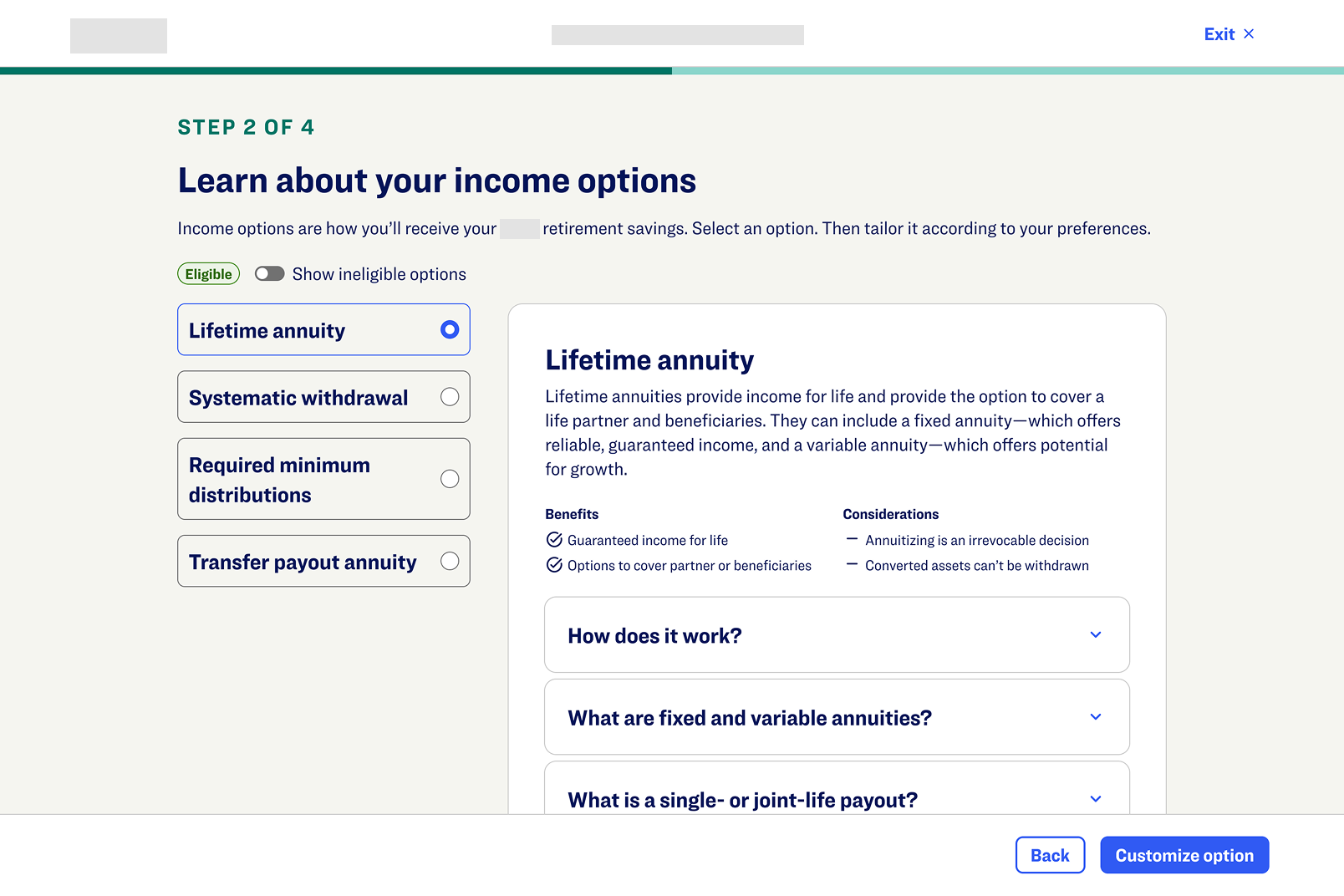
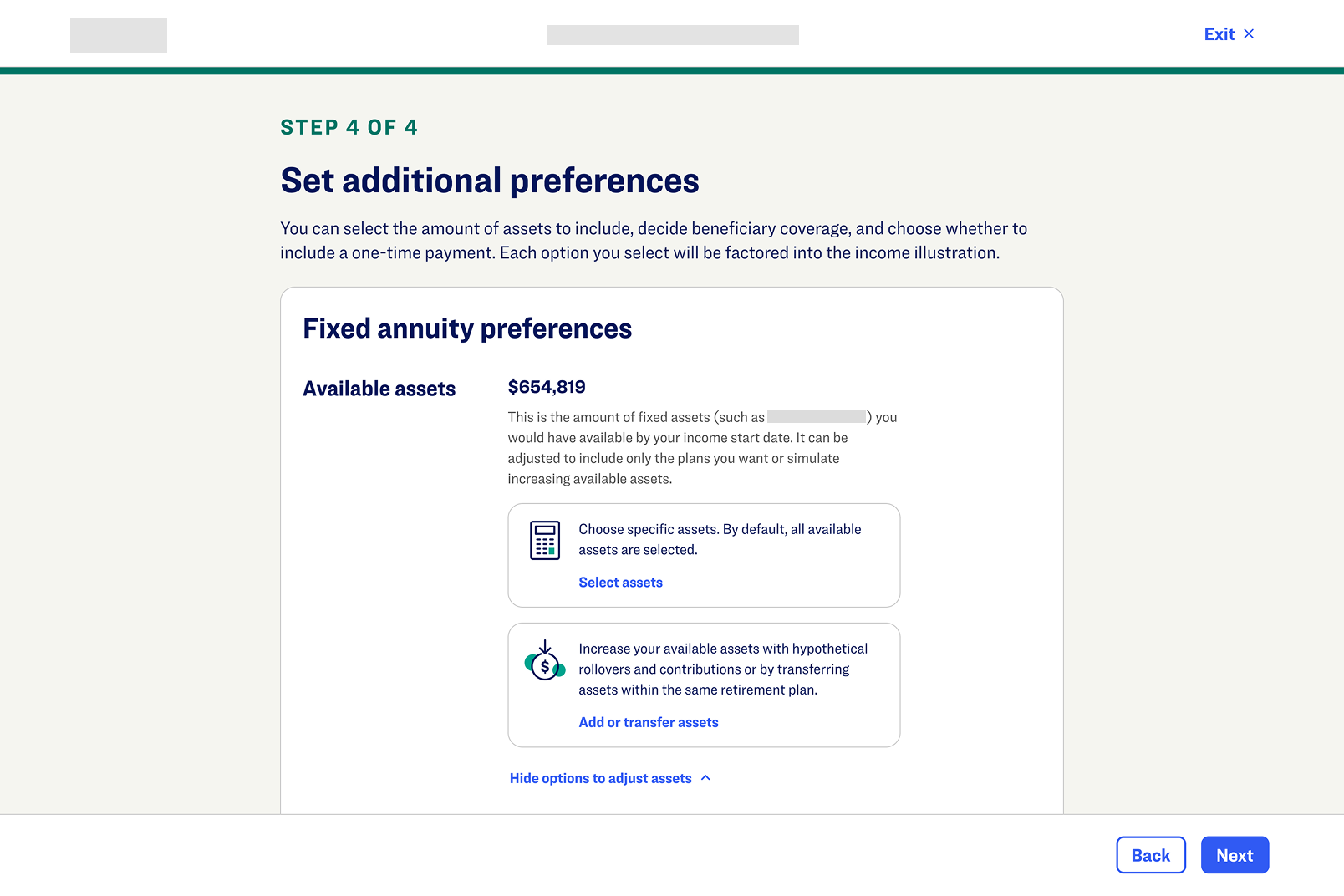
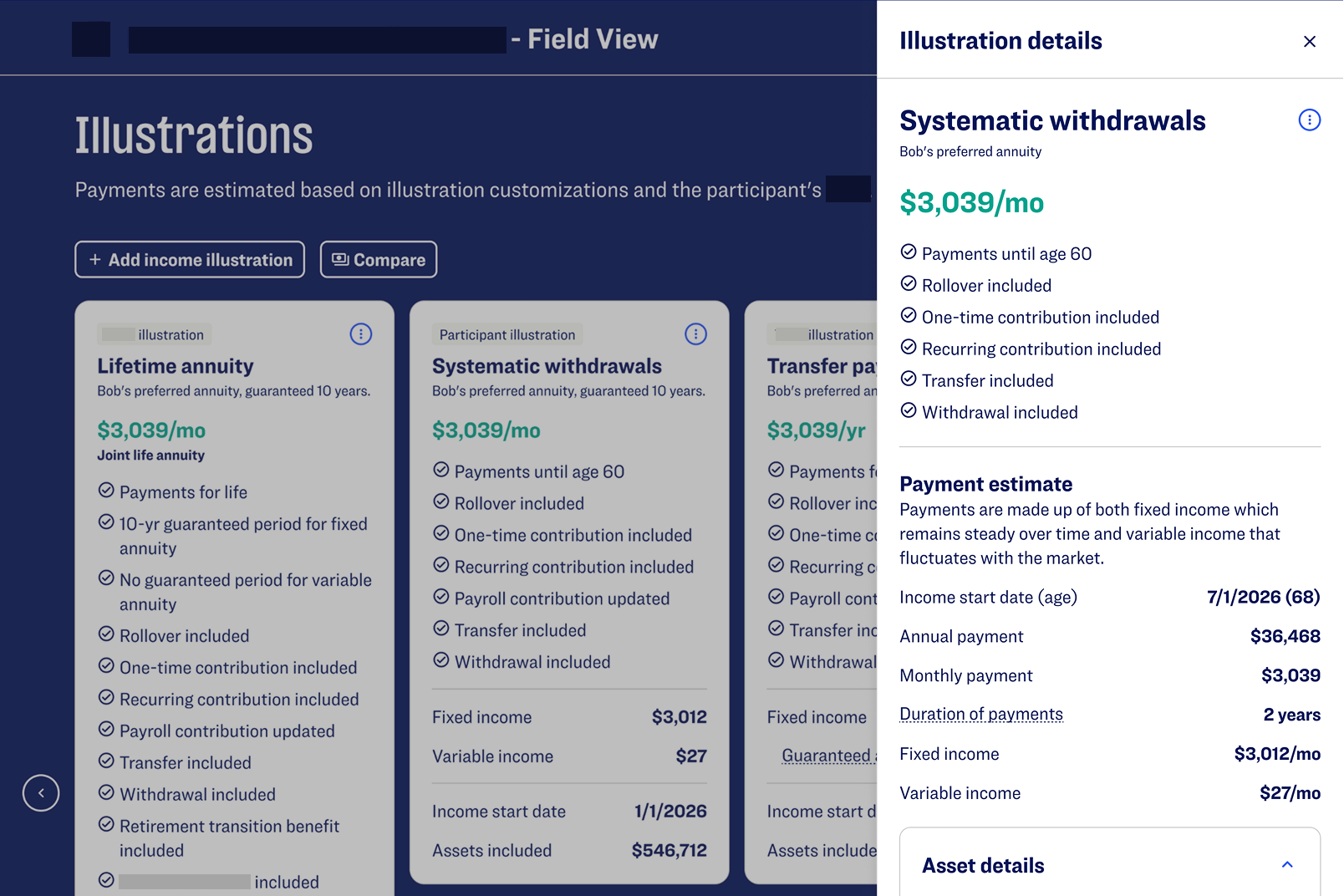
Select screens from retirement education tool
AI use case
Participants and advisors could model realistic retirement income scenarios, but interpreting those projections was left entirely to the user due to a legal requirement to educate, but not provide financial advice.
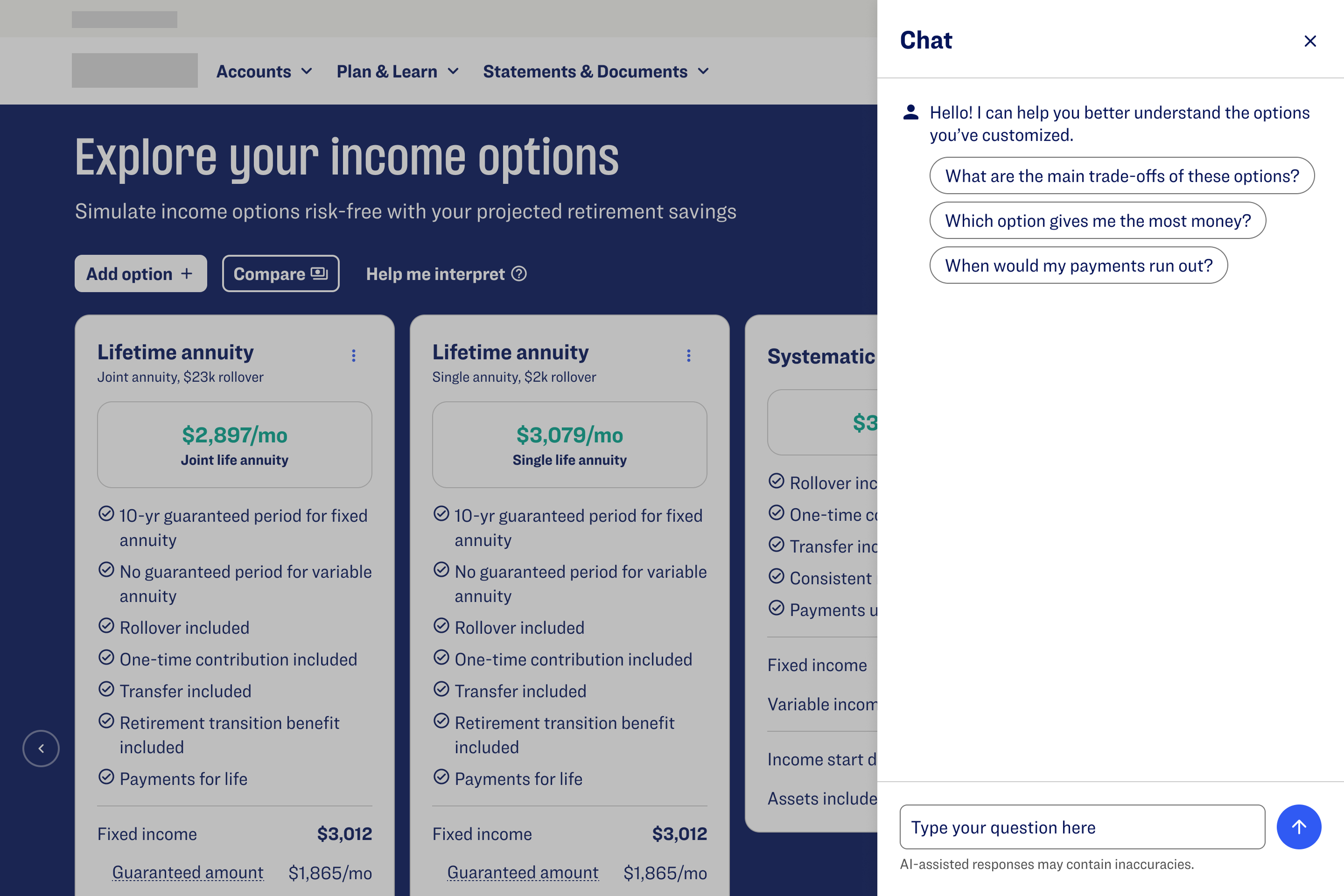
Looking beyond the immediate release, I identified an opportunity for an AI-powered interpretive layer that could answer questions such as, "Which income option would make my money last the longest?" or "Which scenario has the highest projected rate of return?" Rather than recommending specific income scenarios, the interpreter would help users understand and compare scenarios they had already created, thus staying within regulatory boundaries.
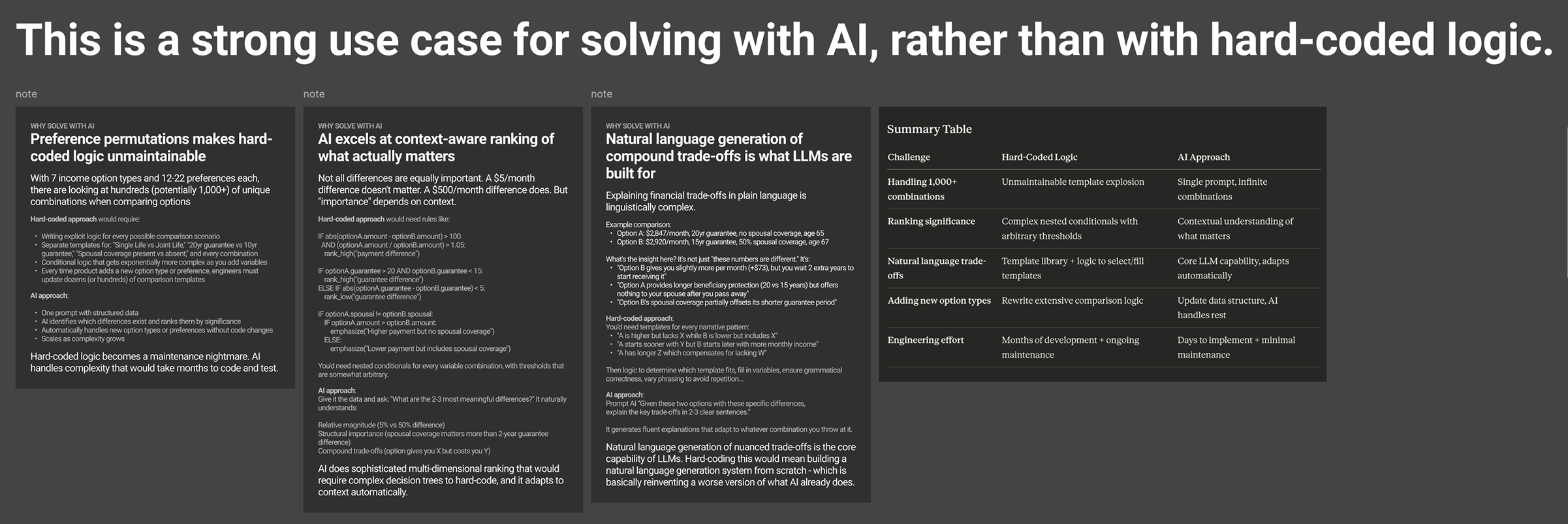
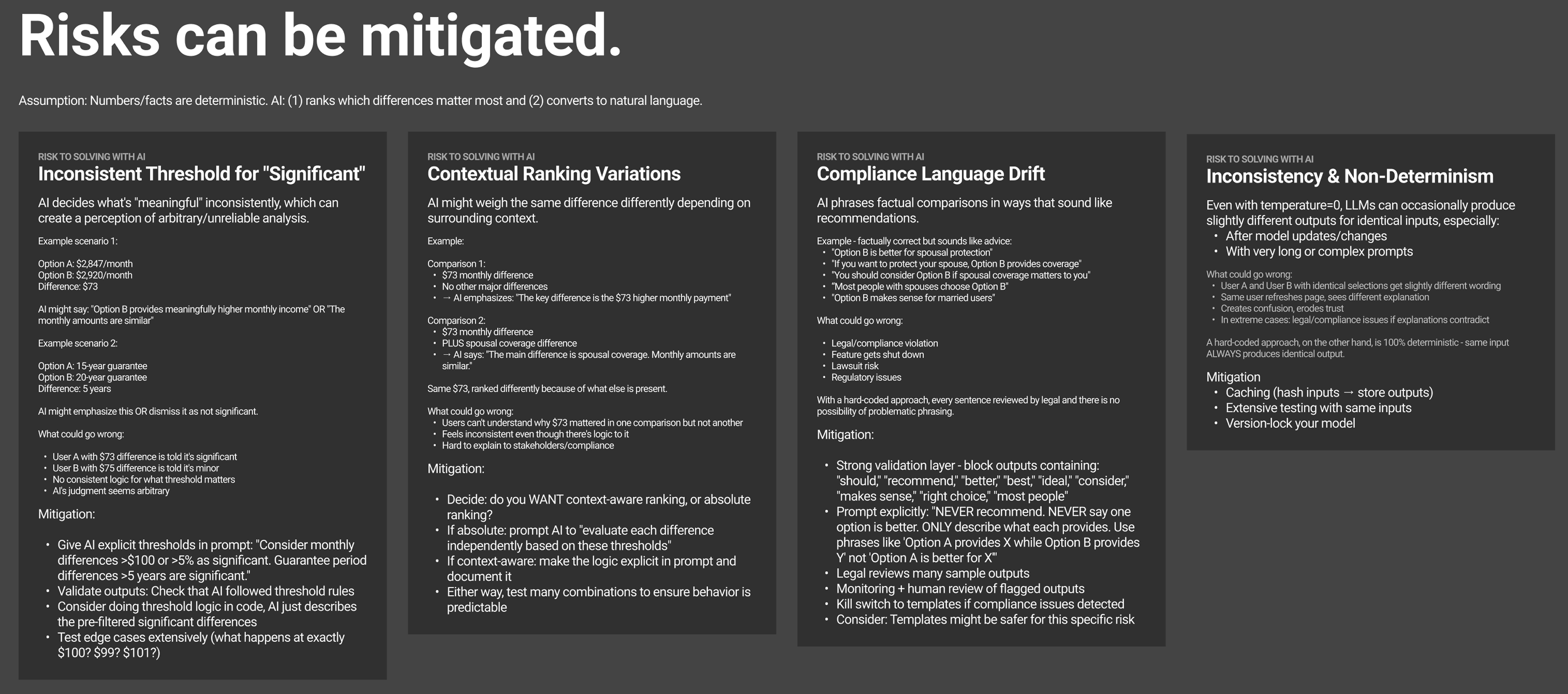
To explore the idea, I developed a proposal outlining why an AI solution was a better fit than hard-coded logic, along with potential risks and mitigation strategies. I also built a prototype in Figma Make to demonstrate the interaction model.
Although the feature was not added to the release because of timeline risk and data readiness, this work demonstrated how AI could increase user confidence and comprehension while respecting regulatory constraints, and it helped shape the organization's broader approach to AI-enabled experiences.
Delivery
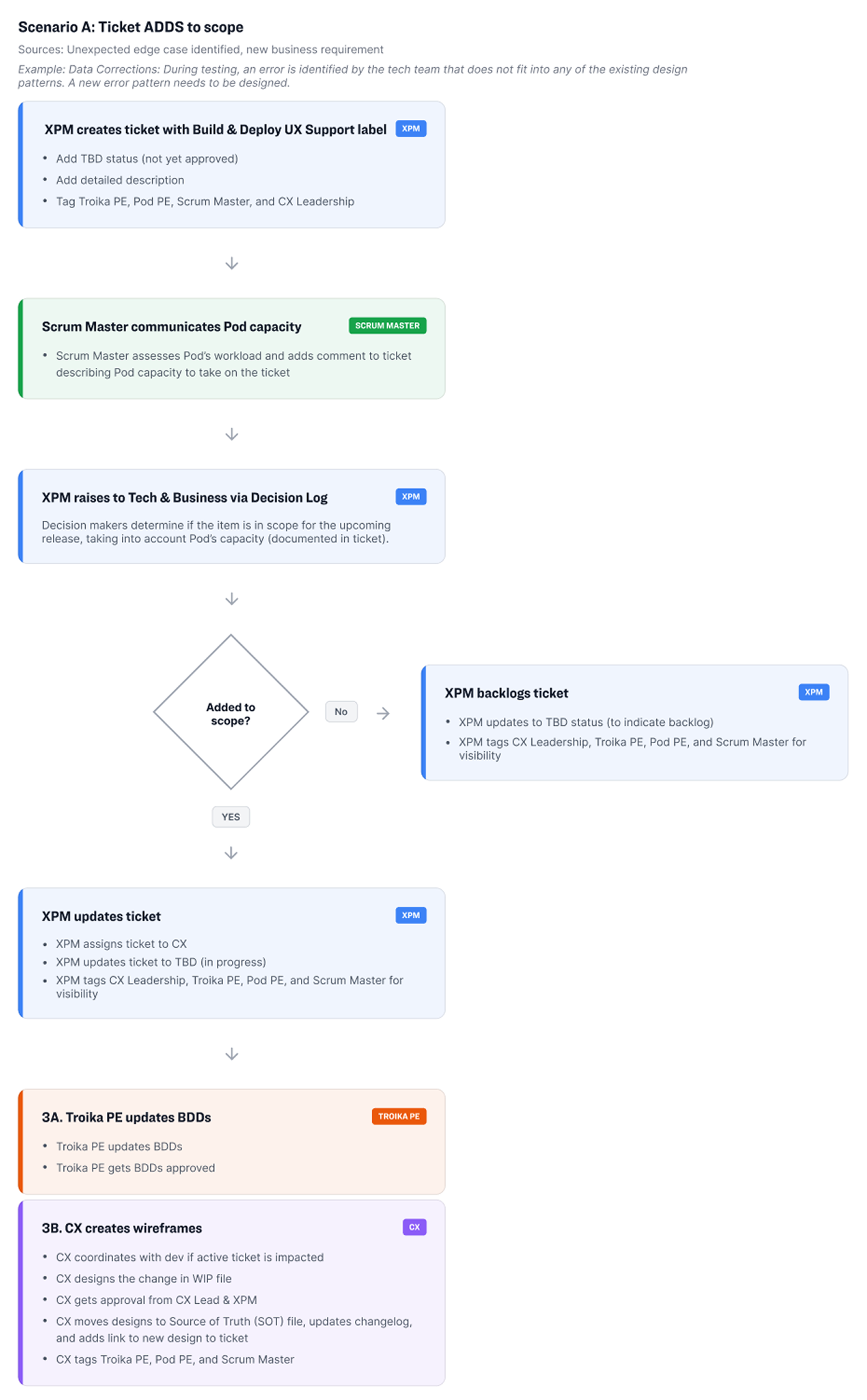
We delivered the experience in three development handoffs, each with detailed interaction and logic specifications. I partnered closely with engineering, reviewing every sprint in a local development environment and logging bugs and defects before release.
Beyond delivery, I also introduced a formal change request process for new requirements and insights from user testing, creating greater transparency around prioritization and approvals. The framework was later adopted by teams across the broader program.