Error management system
Product design, service design, dashboard design, data visualization, user research
Project Summary
When a manual money movement process is automated, what work remains for the specialized associates who once handled it?
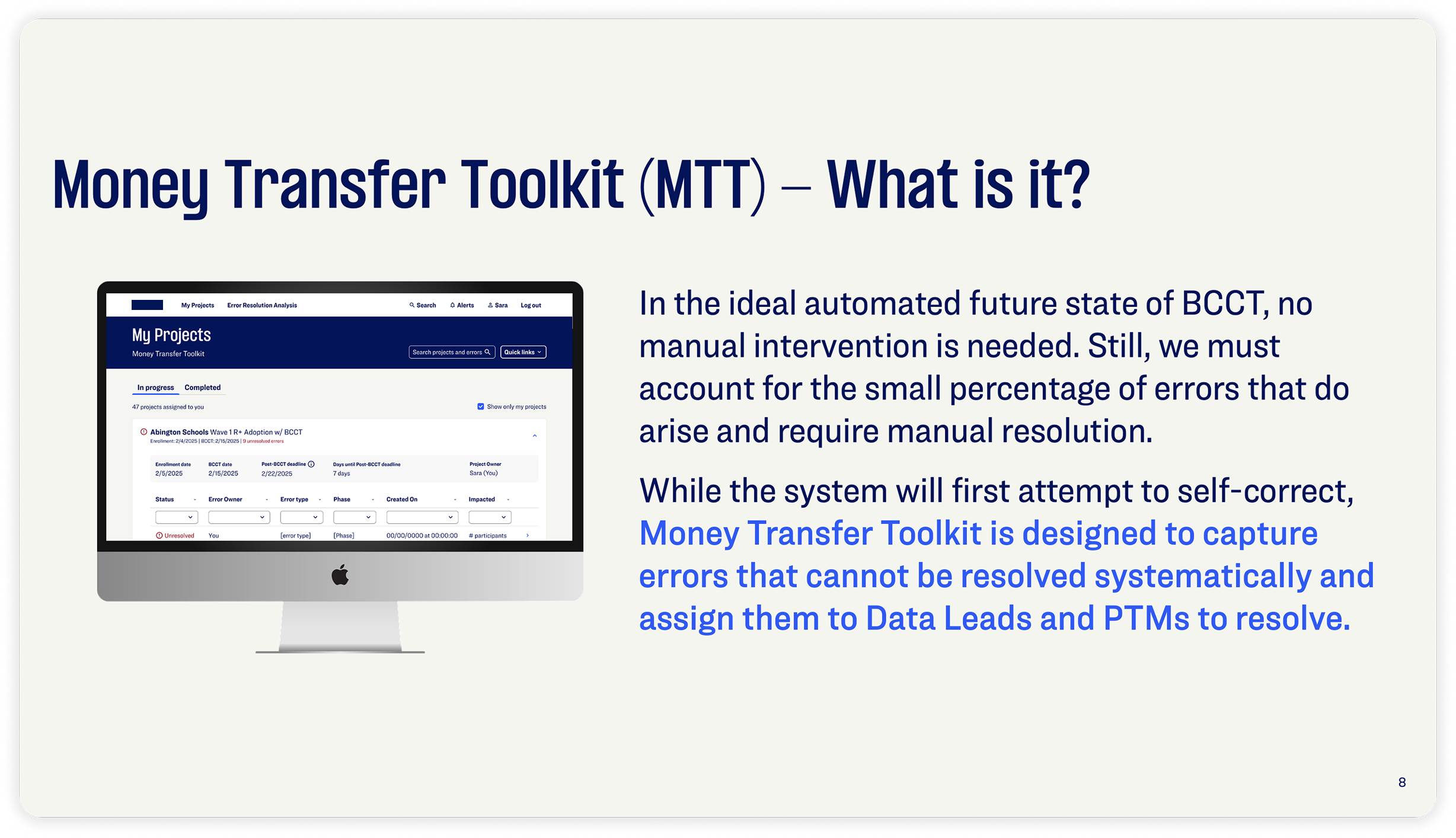
That was the challenge: defining and designing an experience to support these associates' future roles within a 5-year modernization project for a Fortune 100 retirement services company. The work required navigating an ambiguous problem space, a highly technical domain, and the pressure to get this right for these associates whose day-to-day would be completely transformed.
Highlights
- First designer in the modernization project to establish visual and interaction standards for internal associate experiences, adopted program-wide
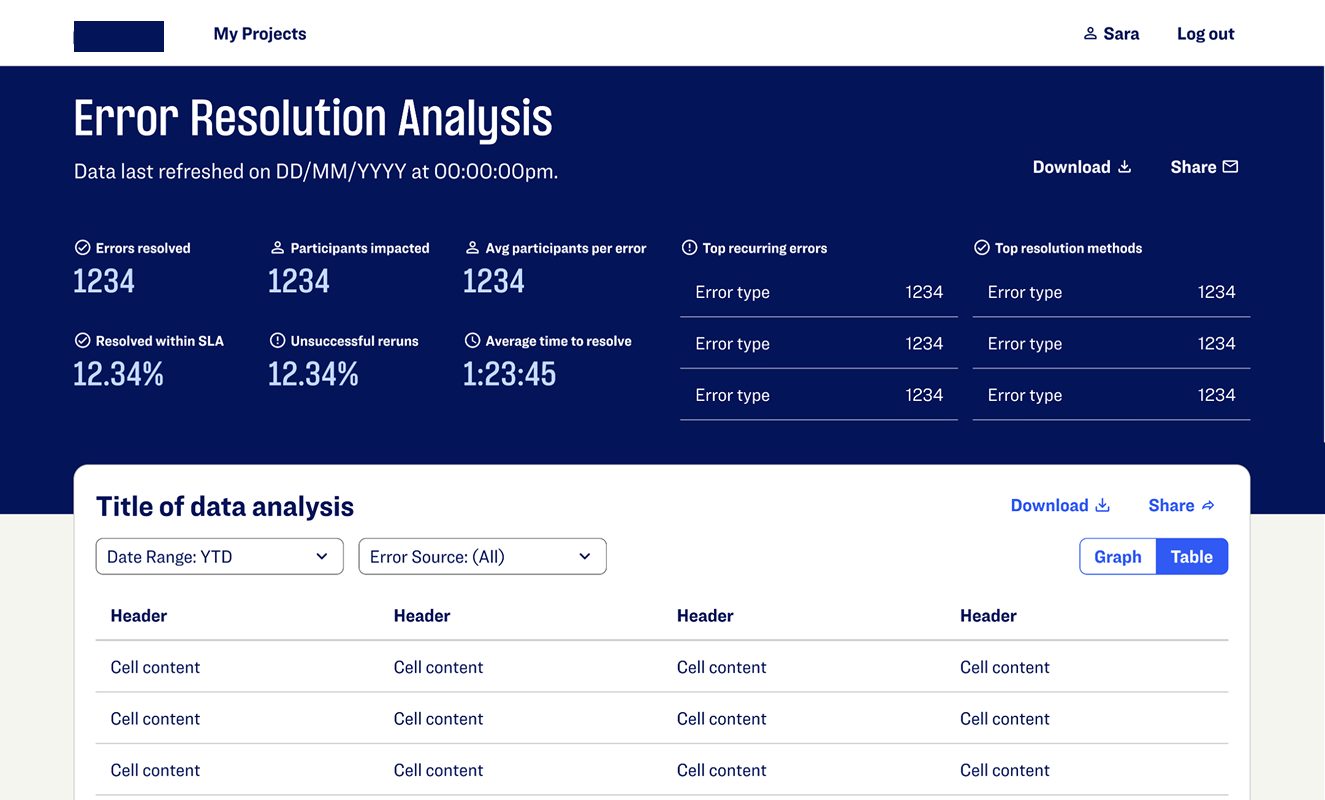
- Proposed an error analytics dashboard that gave leadership visibility into trends in errors to inform future process improvement decisions
- Established and facilitated weekly workshops with director-level stakeholders to solution for and review the experience
Discovery
Re-defining associate workflows
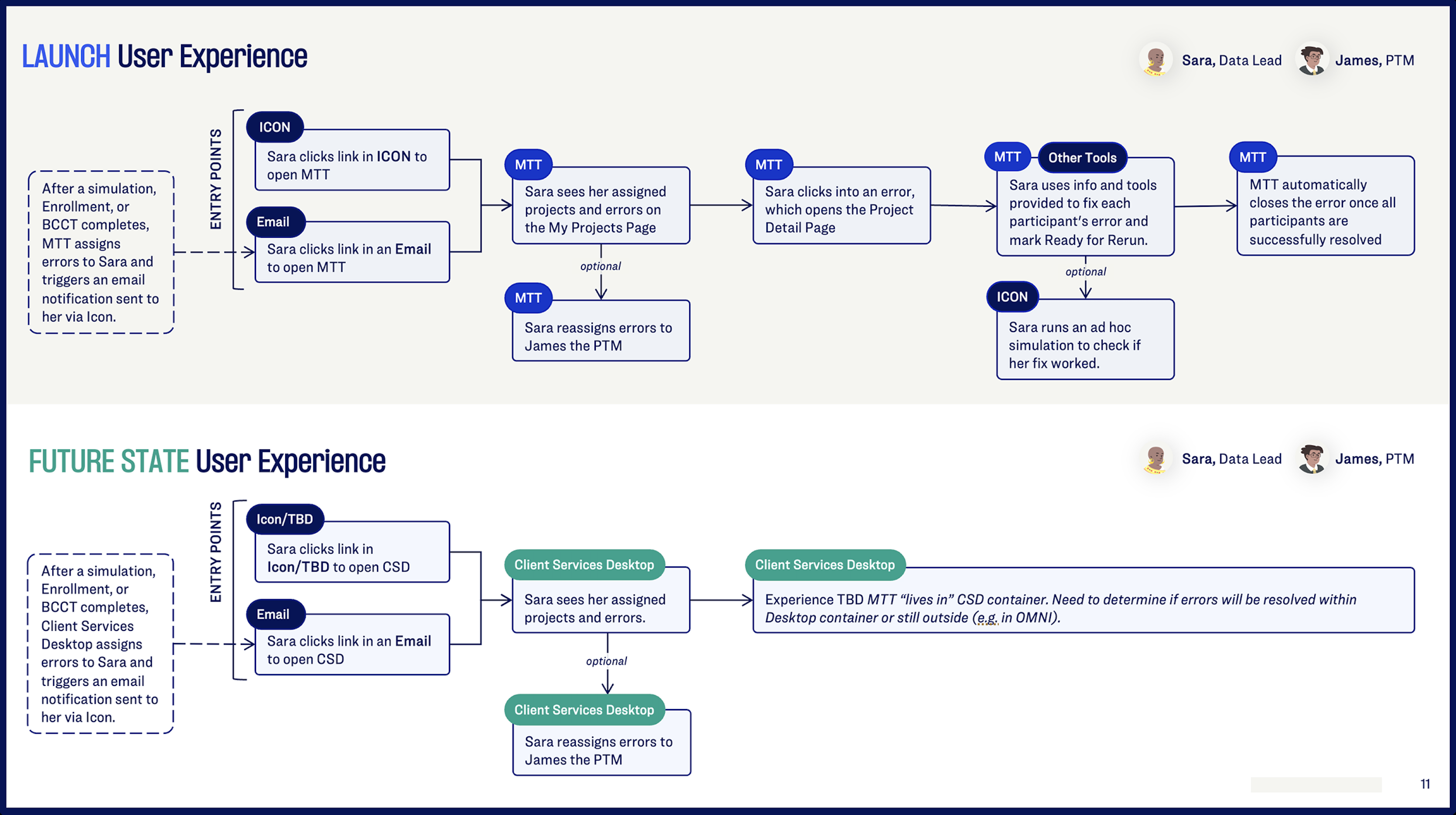
As the money movement automation neared completion, I partnered with a service designer to identify the work that would remain for associates. Through user research and workflow mapping, we found that certain error types would always require manual intervention.
We also uncovered the lack of a structured error intake process. Associates manually reviewed error reports from two separate systems, received inconsistent context from customer service reps, and there was no clear priority or due dates to resolve.
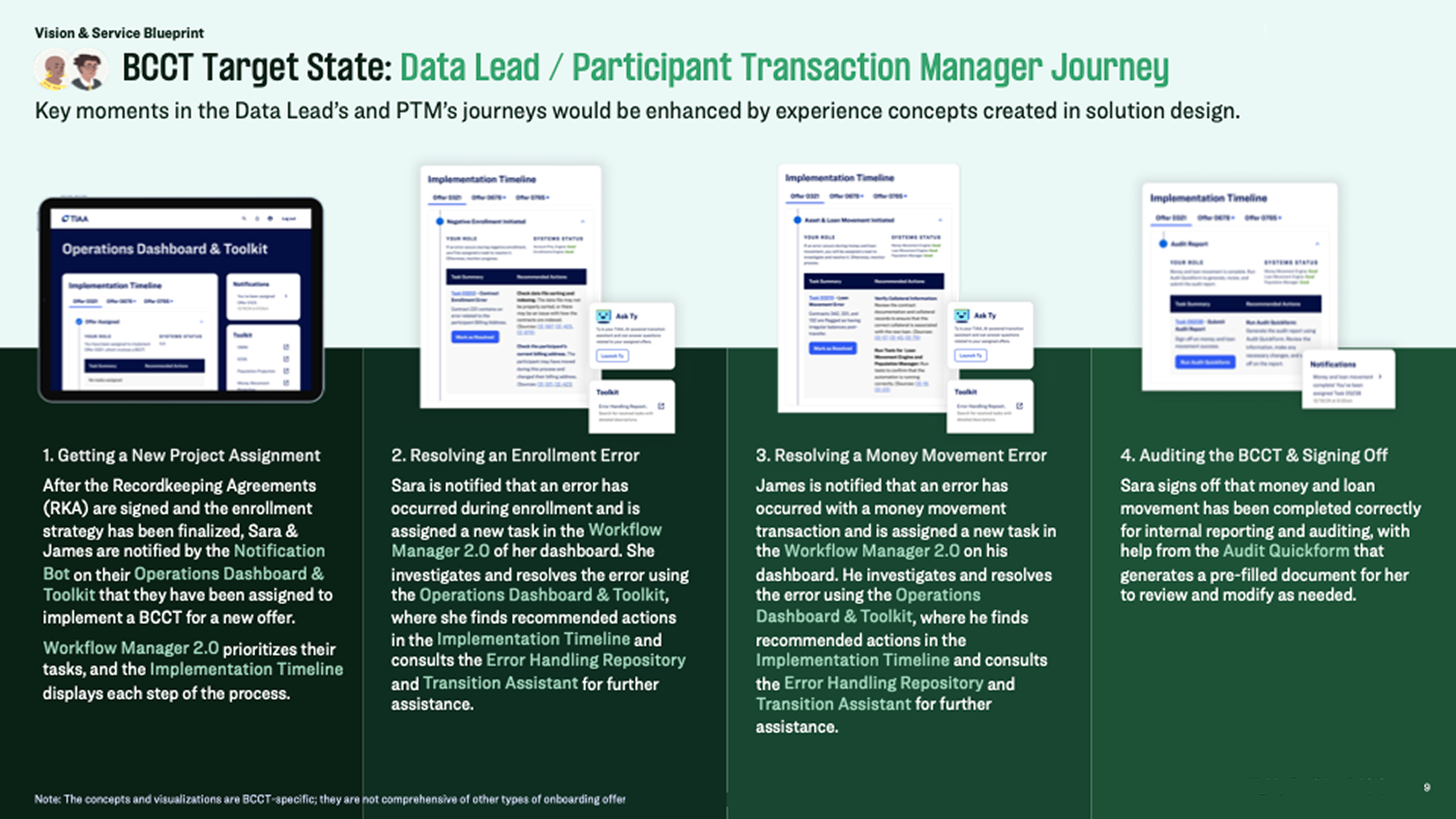
These findings informed a service blueprint, business case, and conceptual prototypes for a new error management experience.
Detailed Design
Making the error management concept real
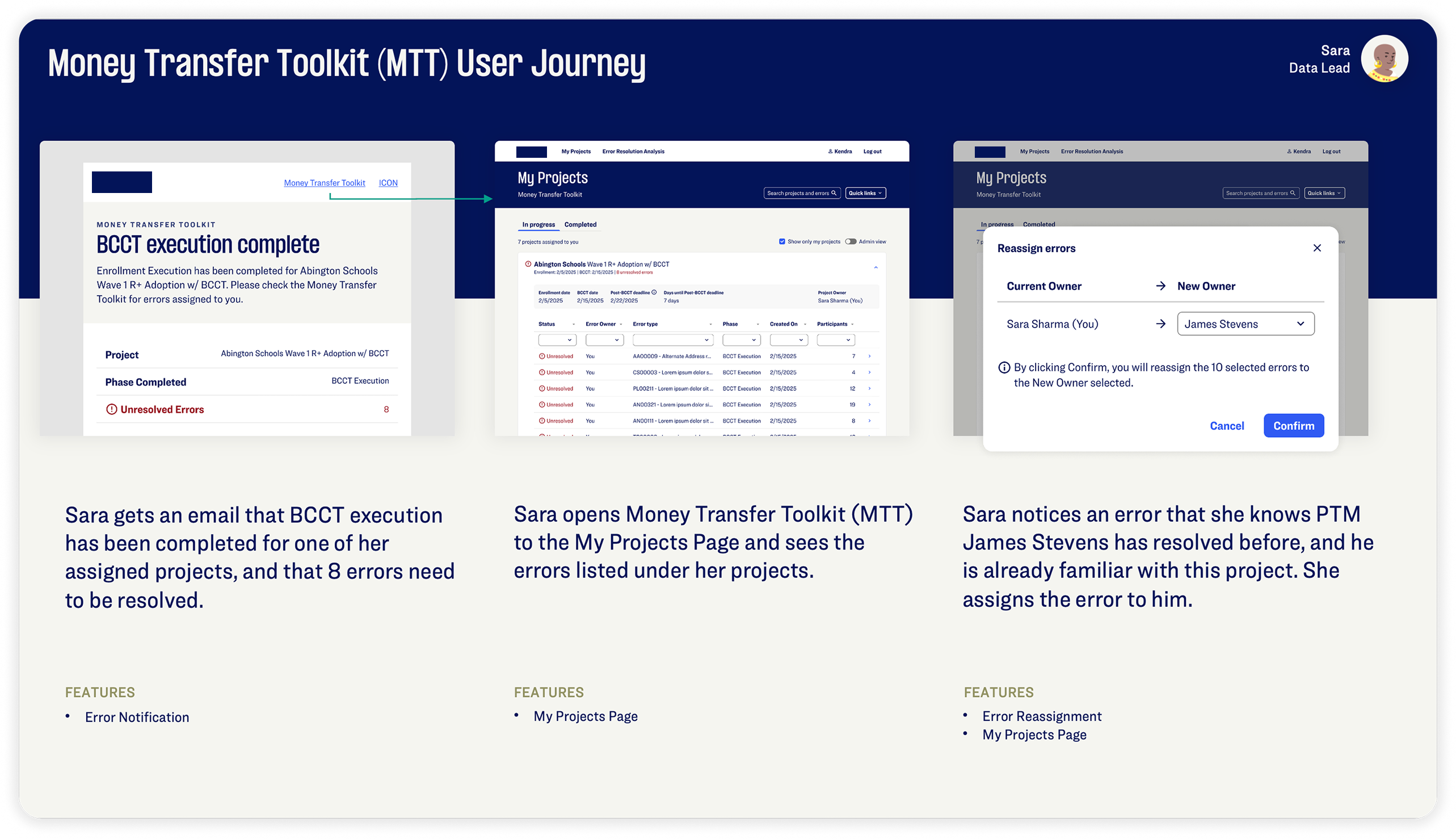
I partnered with engineering to consolidate error data from the two systems, mapped team structures and escalation paths, and created flexible patterns to support all error types. Throughout the process, I facilitated weekly workshops with director-level stakeholders to refine and validate the solution.
I consulted with the design system, content strategist, and accessibility teams to ensure WCAG 2.0 AA compliance. I also worked with the change and adoption team to plan a smooth rollout.
User journey
Identifying strategic opportunity
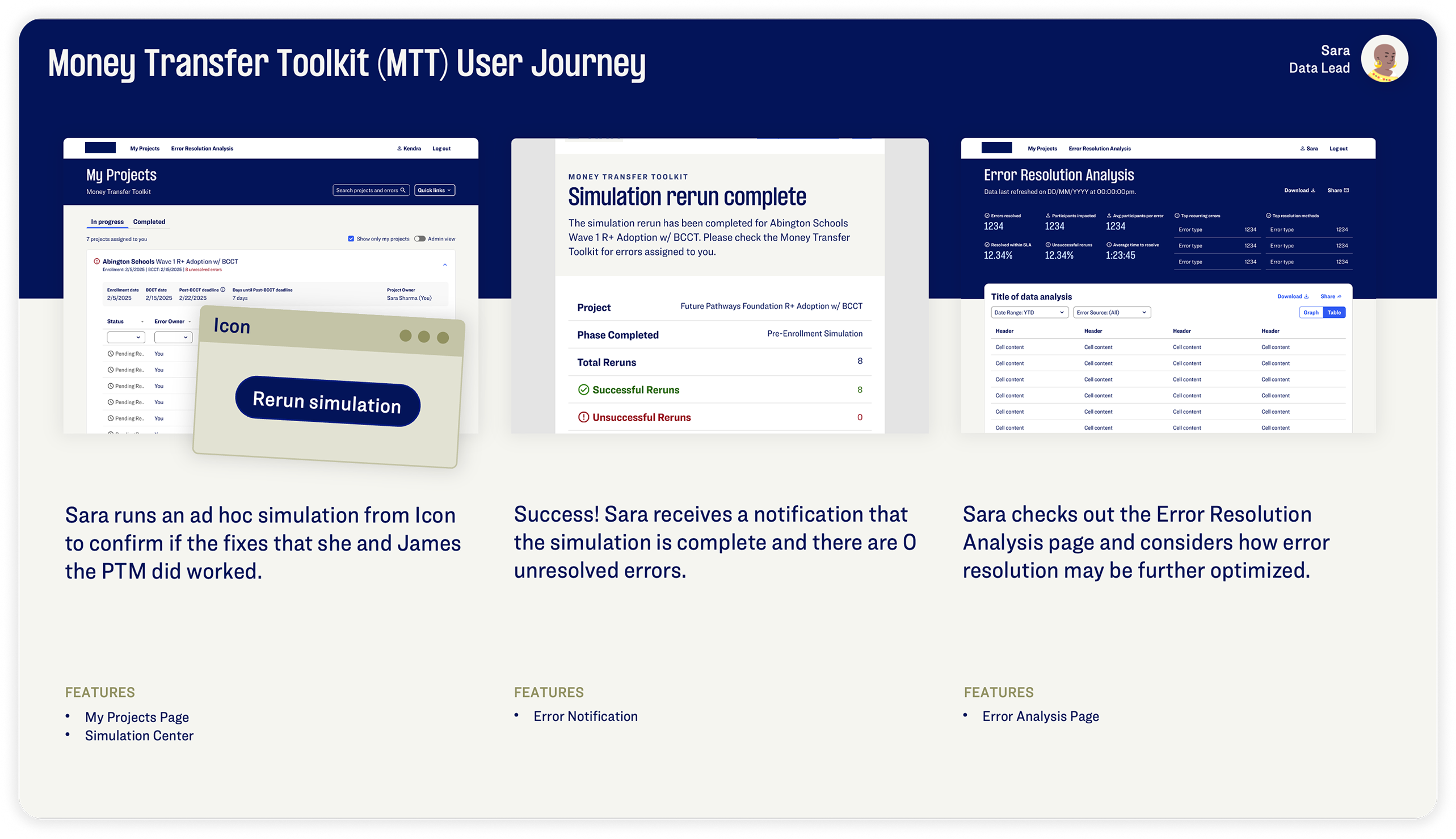
While designing the core error management functionality, I saw an opportunity to use the data to uncover insights including common error types, resolution methods, and error spikes.
Recognizing the strategic value of these insights for future process enhancements, I created a conceptual prototype and proposed it to client leadership. Although it was outside the original project scope, leadership saw enough value to reallocate funding and move the initiative forward.
Delivery
I delivered the error management system on time, with detailed annotations to help the dev team onboard quickly.
What began as an ambiguous ask became a program-wide standard for designing internal employee experiences. Most importantly, it gave associates a clear role in the automated future state and the tool they needed to keep customer funds moving.